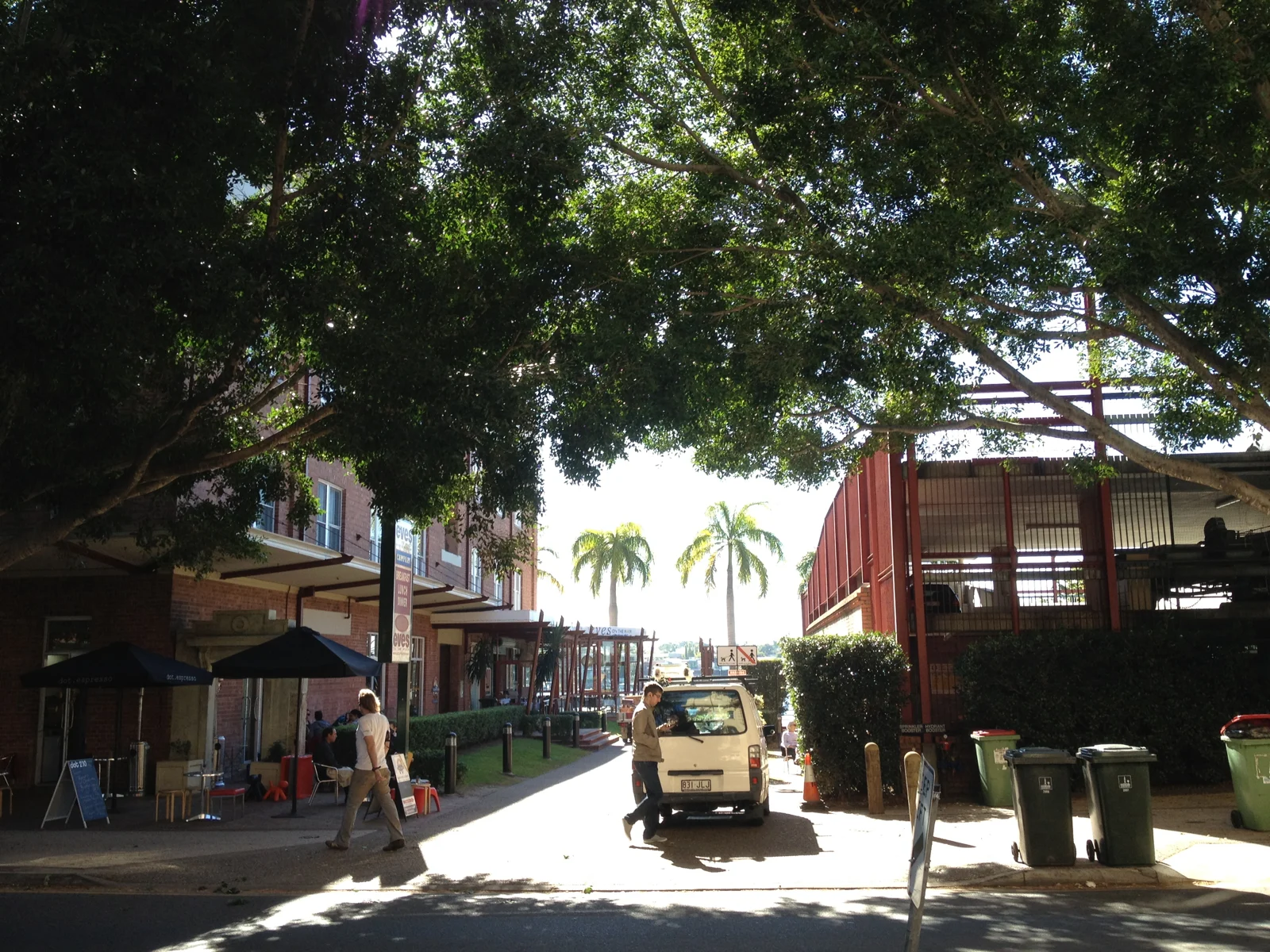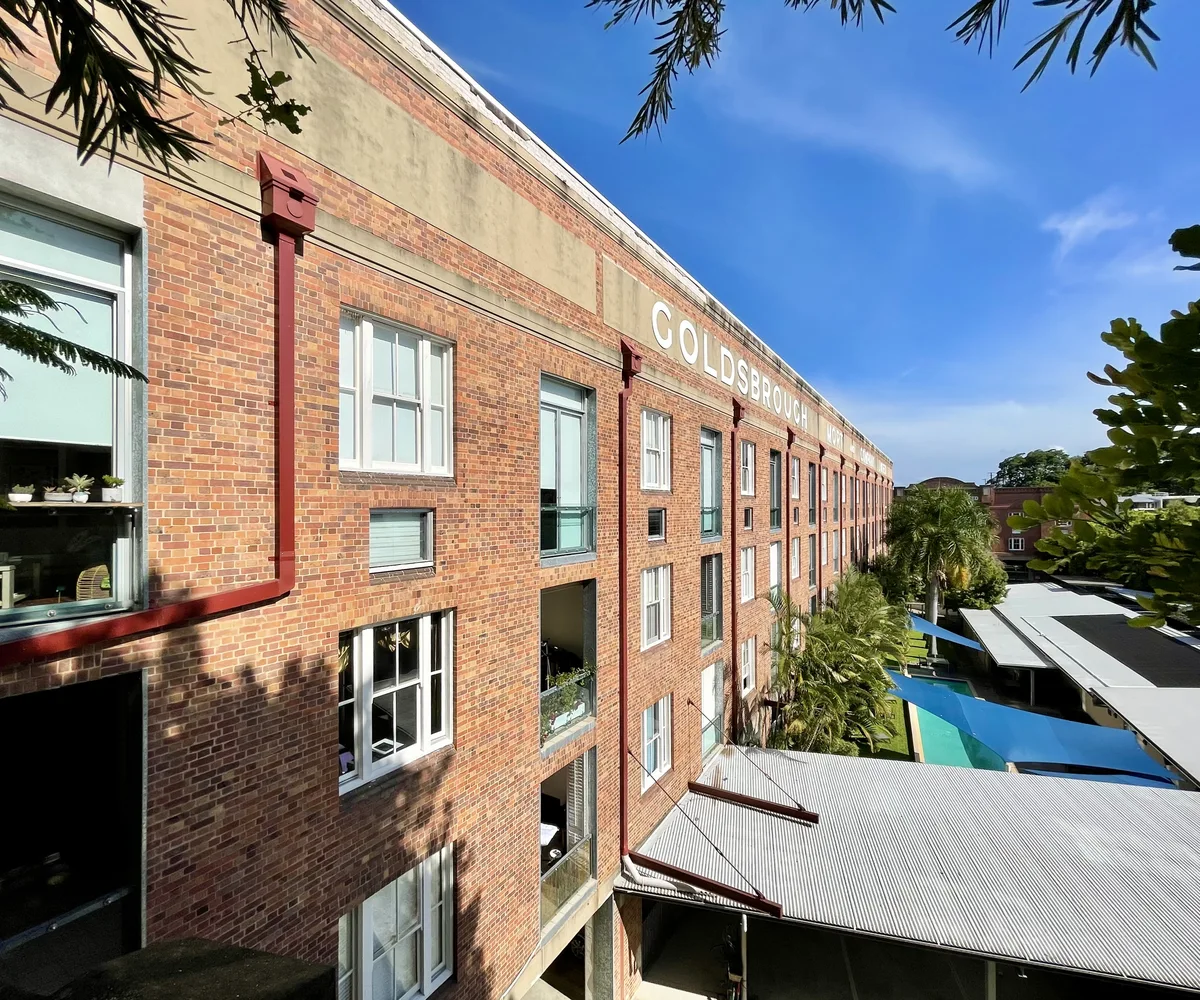
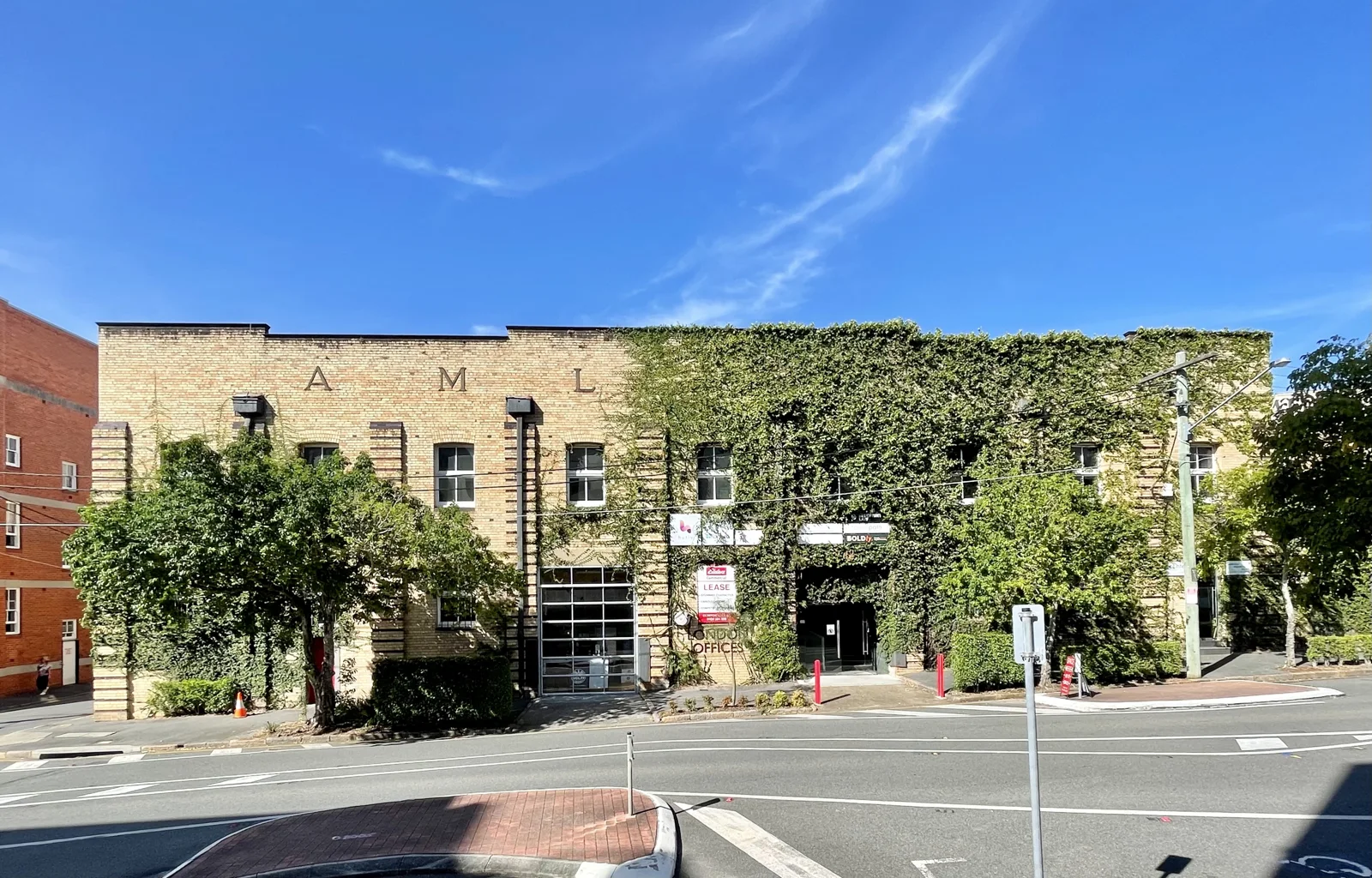
On Teneriffe’s streets, the former woolstores still set the proportions. Broad brick elevations and repeated window openings belong to an industrial landscape that now accommodates homes and businesses.
 View photograph
A district built for wool
Brisbane City Council’s river heritage trail places the construction of the precinct’s distinctive woolstores between 1909 and the 1950s. Their relationship to the river was practical: wharves and railway sidings connected storage with export.
An early residential conversion
Council’s heritage record for the former Queensland Primary Producers woolstore describes its transformation in the mid-1990s into 66 apartments around an atrium, with a restaurant and shops at ground level. It identifies the project as one of the earlier woolstore conversions in the area’s renewal.
The example helps explain the neighbourhood’s mix of large residential buildings and active ground-floor premises. These were substantial structures finding another use, with a street presence inherited from their working lives.
What to look for from the street
Notice the rhythm of the windows, the width of the facades and the way entrances meet the footpath. Compare a long warehouse frontage with the finer grain of nearby shopfronts. The differences are part of what makes a walk around the precinct interesting.
Use public footpaths to explore. Residential foyers, courtyards and shared facilities are private unless access is expressly offered.
Keep exploring
Our woolstores history guide introduces the wider precinct. For a different perspective, continue with the riverfront walk.