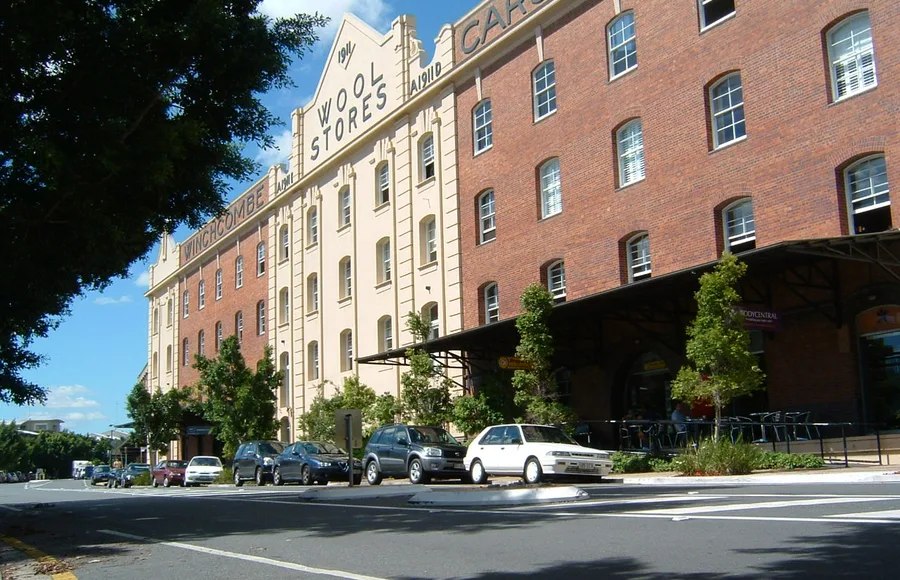
The scale of Teneriffe’s woolstores makes more sense when you picture the river as a working export route. Brisbane City Council’s heritage trail describes a district of warehouses, wharves and railway sidings serving Queensland’s wool industry.
Raw wool arrived by rail, was stored for sale, then pressed and moved to the wharves for export. Distinctive woolstores were built along the riverside from 1909 into the 1950s.
A different life for the warehouses
As riverfront industry declined, the buildings found new uses. Council identifies the closure of the railway siding in 1990 as another step towards the precinct’s conversion. Apartments now occupy many of the former industrial buildings.
Walk along Vernon Terrace and Macquarie Street to see the warehouse scale from street level. Remember that converted woolstores are homes and private premises; appreciate their exteriors from public paths.